
RVTools Bumblebee Malware Attack – How a Trusted IT Tool Became a Malware Delivery Vector
Date of Incident: Tuesday, May 13, 2025
Category: Software Supply Chain Compromise
Initial Detection Method: Microsoft Defender Alert – Suspicious DLL Execution
Identified Threat: Bumblebee Malware Loader Variant

Overview
The RVTools Bumblebee Malware Attack earlier this week serves as a real-world example of a supply chain compromise that briefly turned a trusted tool into a malware delivery vector. On May 13 2025, our security operations team responded to a high-confidence alert from Microsoft Defender for Endpoint. An employee had attempted to install RVTools—a trusted VMware environment reporting utility. Within moments of launching the installer, Defender flagged a suspicious file: version.dll, which was attempting to execute from within the same directory as the installer itself.
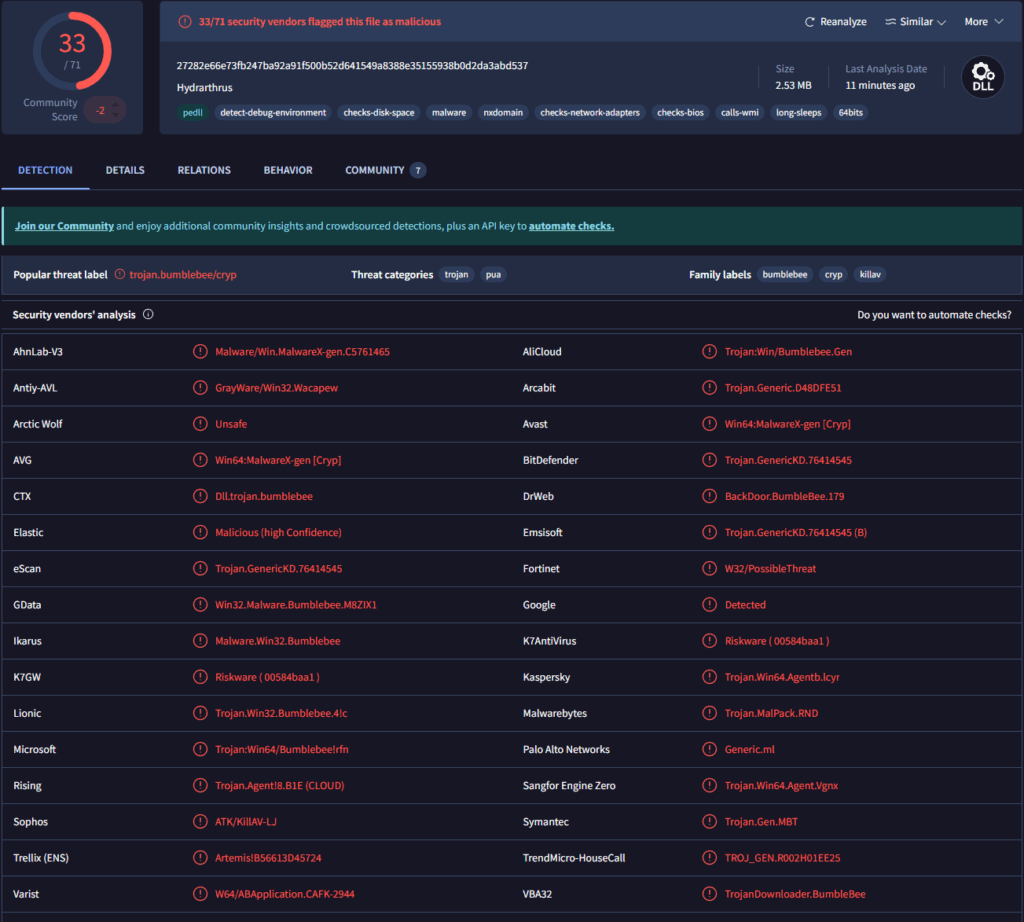
RVTools has long been regarded as a legitimate and safe tool used across many enterprises. However, this incident triggered immediate concern, as this behavior is highly atypical for the installer and hinted at a potential compromise. A hash check and upload to VirusTotal revealed 33 out of 71 antivirus engines detecting it as malicious, identifying it as a variant of the Bumblebee loader malware.
Technical Breakdown
The file was analyzed on VirusTotal, which confirmed that several major antivirus engines had already flagged it. The malware appeared to be a custom variation of the Bumblebee loader, which is known for being used in initial access scenarios by threat actors. This malware family has been used to stage ransomware payloads and post-exploitation frameworks, including Cobalt Strike.
Notably, the file metadata included obscure and suspicious entries:
- Original File Name: Hydrarthrus
- Company: Enlargers pharmakos submatrix
- Product: nondimensioned yogis
- Description: elephanta ungroupable clyfaker gutturalness
These surreal terms are deliberate obfuscation and an attempt at distraction. A loose translation of these terms could suggest a mythological or symbolic reference—possibly to a “god of crime”—though that remains speculative.
Indicators of Compromise and Timeline
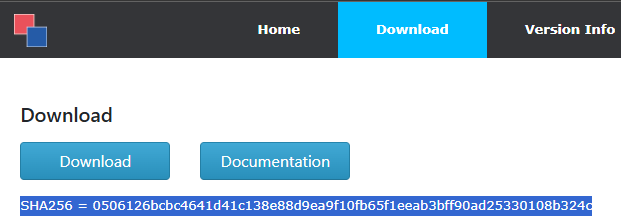
Further investigation revealed a mismatch between the file hash listed on the RVTools website and the actual file being downloaded. The downloaded version was significantly larger and contained the malicious version.dll. Older versions of RVTools did not contain this file and matched their published hashes correctly.
Approximately one hour after our VirusTotal submission, the number of public submissions rose from 4 to 16. Around this same time, the RVTools website went temporarily offline. When it came back online, the download had changed: the file size was smaller, and the hash now matched the clean version listed on the site.
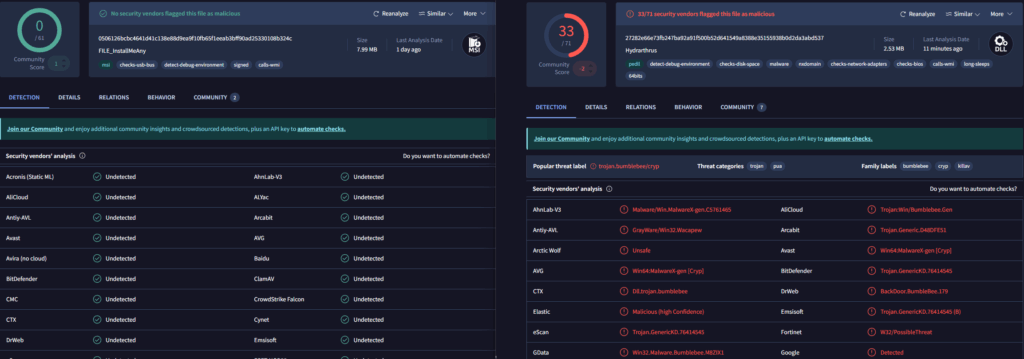
This strongly suggested that the website hosting the installer had been compromised and that the malicious file had been replaced after detection. It appeared to be a temporary and targeted supply chain compromise.
Remediation and Response
After confirming the threat, a full Defender scan was initiated on the affected machine. The malicious file was quarantined, and there was no evidence of further compromise or lateral movement. Additional steps included:
- Verifying older RVTools installations across the network
- Checking download history against known clean hashes
- Submitting internal IOCs to threat intel and detection teams
- Notifying the software maintainer of the suspicious behavior
Key Takeaways
This incident underscores the risks of software supply chain attacks—even against well-established tools. A few major lessons stood out:
- File integrity matters: Always verify hashes, especially when installing from unofficial mirrors or if the vendor lacks code signing.
- Metadata is meaningful: Obscure or esoteric descriptions in executable metadata are often a red flag, even if amusing.
- VirusTotal is a situational ally: The ability to observe the volume and trend of submissions helped validate our incident’s severity and track global exposure.
- Vendors must harden distribution: Using strong code signing, HTTPS-only downloads, and immutable file hosting is critical to prevent hijacks like this.
At the time of writing, RVTools appears to have corrected the issue and restored a clean version of the installer. If your organization has recently downloaded RVTools, it is recommended to verify the installer’s hash and review any execution of version.dll from user directories.
Sometimes, even the most innocuous updates come with surprises—fortunately, we caught this one before it made itself at home.
About the Author
Aidan Leon is a cybersecurity practitioner and threat analyst with hands-on experience in malware detection, incident response, and endpoint protection. Currently working in an enterprise security environment, Aidan specializes in identifying and dissecting real-world threats—including emerging malware variants like Bumblebee—and translating those insights into actionable defense strategies.
When not reverse engineering trojanized installers or analyzing DLL anomalies, Aidan contributes to ZeroDay Labs, a platform focused on cybersecurity news, hands-on guides, and red/blue team tooling. His goal is to bridge the gap between technical depth and operational practicality—always with a sharp eye for supply chain risks and endpoint anomalies.
You can connect with Aidan on LinkedIn or explore more of his work on ZeroDay Labs.
Sources
Incident-Specific Analysis
- VirusTotal – Trojanized RVTools Installer
Community analysis of the compromised RVTools installer delivering the Bumblebee malware. - VirusTotal – Clean RVTools Installer
Analysis of the legitimate, unaltered RVTools installer for comparison. - Secureworks – Bumblebee Malware via Trojanized Installers
Report on Bumblebee loader distribution through compromised installer files.
Further Reading on Bumblebee Malware
- Proofpoint – Bumblebee Buzzes Back in Black
Insight into Bumblebee’s resurgence and evolving malware delivery tactics. - Intel 471 – Bumblebee Loader Resurfaces
Analysis of Bumblebee in new campaigns targeting enterprises. - Cybereason – Threat Analysis Report: Bumblebee
Technical breakdown of how Bumblebee establishes control in enterprise environments. - VMRay – Understanding Bumblebee’s Malicious Behavior
Deep dive into Bumblebee’s evasion techniques and loader structure. - Malpedia – Bumblebee Malware Family
Centralized repository of data and samples related to the Bumblebee malware family. - Netskope – Bumblebee Loader Infection Chain
Report on recent infection patterns and evolving campaign infrastructure. - Critical Start – Bumblebee via Malicious Ads (PDF)
Situation report on how Bumblebee is being distributed through online advertising. - Conceal – Threat Alert: Bumblebee via Ads and Websites
Overview of Bumblebee’s distribution through ad traffic and compromised web infrastructure. - IT Brew – Bumblebee Shifts from Email to Ads
Summary of Bumblebee’s transition from phishing emails to ad-based delivery mechanisms.